the complete ixthuluh discography
Die folgenden Downloads zeigen in chronologischer Ordnung die
musikalische Entwicklung. Das Ixthuluh-Material stammt von
2-Spur-Tonbandmaschinen, die damals übliche Audio-Standardgeräte
waren, und das nach der Auflösung der Band bei mir geblieben ist.
see too: History
of
the origin.
Die Entstehungsgeschichte dieser Krautrocksammlung.
The following downloads show in
chronological arrangement the musical process.
The Ixthuluh-material descends from
2-track-tape recording machines, which were common audio
appliances at this time. The tapes remained by me when the band
splitted in 1981.
die 3 Ixthuluh-Phasen
dokumentiert in 4 Alben, einer Compilation, einer
Überarbeitung
mit insgesamt 58 Krautrock-Schätzchen
Und: Sensation - seit März
2020 eine Vinyl-LP
Erwarten Sie keine glattgeschliffenen
Studioaufnahmen !
Die Stücke stammen allesamt von bis zu 30 Jahre alten Bändern, die
wir so wie vorgefunden ausgelesen und ins digitale Format überführt
haben.
Es ist nicht Absicht, den üblichen Hörgewohnheiten entgegenzukommen,
vielmehr soll ein Schlaglicht geworfen werden auf die musikalische
Arbeit der Gruppe, den kreativen Prozeß. Ixthuluh hat sich niemals
dem gängigen Musikgeschmack angebiedert, sondern immer versucht, den
eigen Sound zu definieren. Entsprechend schwierig ist es manchmal
auch für den unbedarften Zuhörer, diesen Zugang nachzuvollziehen.
Doch wenn man sich darauf einläßt, wartet ein durchaus spannendes
musikalisches Abenteuer.
alle mp3's sind mit 192 kBit komprimiert, sie haben je nach Länge
zwischen 1 und 35 MB Größe.
Don't expect honed studio-recordings.
All tracks descend from up to 30 years
old tapes, which we read out so as recovered and transfered into
digital format.
It's not our intent, to make advances to
hearing-habits as usual. We will have a brightlight at the musical
work of the group during the years. Ixthuluh never chumed up to
the established flavour but always tryed to find the own sound. So
it's sometimes difficult for the ingenuous auditor, to comprehend
the access to this kind of music.
But if you engage with you can expect an
exciting musical adventure.
Turn up you stereo equipment to a proper
volume or hear this with your headphones.
Our music didn't live from artful
arrangements or irrecoverable compositions, but from sound and
eagerness and from the direct communication.
The first recordings of "Yes,We Are A
Jazzband" we rehearsed prior jamming the themes. Later we only
played, everything is unique.
X-Happens !
und noch eine Empfehlung:
drehen Sie Ihre Stereoanlage auf eine ordentliche Laustärke (oder
horchen Sie die Stücke über Kopfhörer) - unsere Musik hat nicht von
raffinierten Arrangements oder den unwiederbringlichen Kompositionen
gelebt, sehr wohl aber von Sound und Spannung, von der direkten
Kommunikation.
|
|
THIS
WAS
the craft of, 1976-1981 |
|
|
musicians:
James Geiblinger
bass
Dita Lasser e- and
ac. guitar,
e-bass, keyb., lead voc
Max Wedl sax
Michael Brandstetter
drums
Ernst Matscheko,
drums, perc.,
bass, delay, devices
feat.
Adi Nimmerfall,
flute, keyb.
Pez, perc.
Werner Katzmair,
guitar
E.P. Kirch, bass,
guitar, voc
|
Dieser
Sampler
zeigt den musikalischen Bogen, den Ixthuluh über die Jahre
geschlagen hat. Zehn Nummern aus den vier regulären Alben
(teilweise neu abgemischt) machen ein Album für den
Einsteiger, der Ixthuluh kennenlernen will und bringt mit 2
neuen, bisher unveröffentlichten Stücken auch ein Zuckerl
für den eingefleischten Fan !
This compilation shows the bow
of the musical way, the band went through the years. 10
tracks from the 4 regular albums (partially new remix)
make an album for those who get to know Ixthuluh and
brings with two previously unreleased tracks a candy for
the hardcore fan
|
|
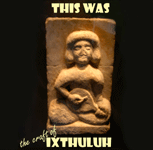
 Front / Back Cover / Lautenspieler / Pergamonmuseum
|
|
Yes
We
Are A Jazzband, 1976/77 |
|
|
musicians:
James Geiblinger
bass
Dita Lasser e- and
ac. guitar,
e-bass, keyb., lead voc
Max Wedl sax
Michael Brandstetter
drums
|
Nomen
est Omen.
Unglaublich, wie jazzig die Band damals gespielt hat. Alles
live aus dem Kuhstall, mit und ohne Handschuhe gespielt. Aus
mehr oder weniger langen Jams herausgeschnitten und
zusammengeklebt.
Ixthuluh grüßt Gato.
Incredible, how jazzy the band
played that time. All comes live out from cowstable,
played with and without gloves (it's cool). Cutted and and
agglutinated from jams, more ore less long. Greetings to
Gato !
|
|
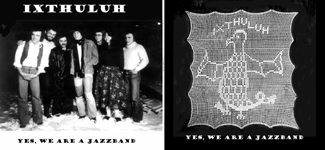 Front/Back Cover
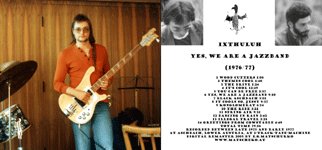
-
- Inside Cover
* We apologise to Mr.
Lennon and Mr.McCartney. We will do it never again!
|
|
No
Money
For A Radio 1978/79 |
|
|
musicians:
Dita
Lasser e- and ac. guitar,
e-bass, keyb., lead voc
Max Wedl sax
Ernst
Matscheko, drums, perc.,
bass, delay, devices
guests:
Werner
Katzmair, guitar
E.P. Kirch, bass,
guitar, voc
Weitere Gäste, die zu dieser Zeit
öfters mitgespielt haben, waren
Pez
Peter Poppenreiter
Fredl Lengauer
Fritz Hesser.
Ob einer davon auch tatsächlich
zu hören ist, kann ich mit Sicherheit
nicht sagen, es wäre aber möglich!
Ich bin da dankbar für jeden Hinweis.
|
Die
Band
hat den Bassisten und den Schlagzeuger verloren und steht
musikalisch vor einer völligen Neuausrichtung. Entsprechend
experimentell ist dieses Album, alles wird probiert, alles
ist erlaubt, jeder spielt alles.
Die Stücke entstanden alle im direkten live-Spiel, meist als
Hausmusik zu unseren zahlreichen Festen, oft mit anwesenden
Gästen. Es ist heute nachträglich völlig unmöglich, jeden
Musiker zu identifizieren und ihm das entsprechende
Instrument zuzuweisen.
Obwohl dieses Album aus mehr oder weniger zufällig
entstandenen Stücken besteht, ist es doch das logische
Missing-Link vom jazzigen "Yes We Are A Jazzband" und dem
runden, psychedelischen "Tea At Two", in dem die Band ihren
Sound schon gefunden hatte.
The band lost bassplayer and
drummer and was looking for a reorientation. According to
this the band is experimental, trying and admitting
everthing, everybody plays several instruments.
The tracks become in
live-playing, mostly as house-music to our numerous
parties. It's today not possible to identify, who played
which specific instrument.
Though this album is developed
from more or less accidental songs, so is it anyway the
missing link from the jazzy "Yes We Are A Jazzband" and
the round, psychedelic "Tea At Two", where the band
already had found his sound.
|
|
"No Money For A Radio" wurde von verschiedenen Seiten als zu
dokumentarisch kritisiert und als nur für jene interessant, die
Ixthuluh zu dieser Zeit gekannt haben. Da ist auch durchaus was dran
gewesen - als wir das Album zum ersten Mal zusammengestellt haben,
ist uns das Dokumentarische wichtiger gewesen als die musikalisch
eingängigeren Stücke auszuwählen.
Wir haben das Material für das SE-Album nun neu geschnitten und
zusammengestellt. Wir habes manches weggelassen und anderes
dazugegeben. Insgesamt haben wir es damit gestrafft und für den
Hörer etwas kompakter gemacht, ohne (hoffentlich) den ursprünglichen
dokumentarischen Charakter zu verlieren.
Leicht verdaulicher Mainstream ist von der Band so oder so nicht zu
erwarten, aber mit der Neuauflage ist dieses Austrokraut doch etwas
leichter erhörbar geworden.
"No Money For A Radio" was critiqued
from several sides, that it was to documental and only interesting
for those who knew Ixthuluh at the time when recording this
tracks. This is actually right - when we assorted the material the
first time in order to make the album, this was more important for
us than to choose the tracks which are easier to comprehend or
which give the better sound.
Now we cutted and compiled the material
new for the SE-album. We put something away and something we put
in. All in all we tightened it and made it more compact without
loosing (so we hope) the primary documental character.
Easy to digest mainstream isn't be
expected from this band by hook or by crook, but this austrokraut
is more easy to apprehend with this new edition.

- Front/Back Cover
-
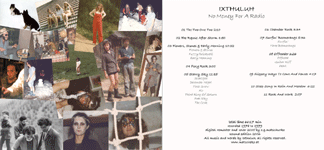
-
- inside cover
-
|
|
|
SMASH,
2020 / rec.1980 |
|
|

|
|
The material released on this vinyl is a cut-out of "Tea
At Two", which we re-cut for the usual 2 x 19 min vinyl
length. We decided on three tracks for side 1, namely „Lonely
Chair“, „Love Pain“, and „Skating In Moonlight“ (which was
published on „What’s The Name“ ). Side 2 is one track of
almost 20 minutes with a shortened version of „Gila Bridge“.
That should be a representative selection from this creative,
psychedelic phase. Though the tracks show the rather rocky
side of the band.
“Smash” is our very first vinyl release – 40 years after the
recording session. |
|
A1 Sittin' On My Lonley Chair
12:06
Drums - Ernst Matscheko
Electric Guitar, Vocals – Dita Lasser
A2 Love
Pain 3:12
Bass- Ernst Matscheko
Drums – Pez
Electric Guitar, Vocals – Dita Lasser
A3 Skating In Moonlight
3:54
Bass - Dita Lasser
Drums, Percussion – Ernst Matscheko
Electric Guitar – Werner Katzmair
Flute – Adi Nimmerfall
B1 The Long Trail To Gila
Bridge 19:38
Bass – Dita Lasser
Drums, Percussion – Ernst Matscheko, Pez
Electric Guitar – Werner Katzmair
Vocals – Egon Peter Kirch
Cover – Mud Shurko
Layout – Dominik Uhl
Mastered By – Audiobomber (tracks: A1, A2, A3, B1)
Recorded in 1979/80
Digital transfer 2004 by Mud Shurko
Remix for vinyl 2019 from original mono and stereo tracks
Pressed by Austrovinyl in 2020
Noise Appeal Records – noise85
Noise Appeal History Series #001
Vinyl, LP, Limited Edition, 50 solid viola + 283 black copys
with 8-pages full colored booklet, download code, banderole
GET IT!
Für Bestellungen aus Deutschland: bei Sounds of Subterrania
https://soundsofsubterrania.com/shop/shop.php?pid=16592
Für Österreich und den Rest der Welt: im Onlineshop von Noise
Appeal
https://store.noiseappeal.com/shop/music/vinyl/ixthuluh-smash/
|

(8-seitiges booklet, Kurzanimation)

sleeve
Das ist die erste und einzige IXTHULUH Vinyl LP.
Die LP enthält vier Titel, die wir neu gemischt und
geschnitten haben, und die von "
Audiobomber"
Alex Jöchtl
(Castlemastering) speziell für die LP gemastert wurden.
Die vier Nummern unterscheiden sich von hier veröffenlichten
mp3 also in Länge und Sound.
Dieses Album gibt es exclusiv auf Vinyl, zum Reinbeissen.....
180g, mit Download-Code, 8-seitiges 30x30cm Booklet, Banderole
Holt es euch, solange es erhältlich ist.
Hier:
Für Österreich und den Rest der Welt: im Onlineshop von
Noise Appeal

Till Philippi und Dita Lasser
bei der Platten-Präsentation: Samstag 7. März 2020
Vinyl & Music Festival, Ottakringer Brauerei, Wien
This is the one and only IXTHULUH vinyl-LP.
The four tracks on this LP differ from the mp3 on this
download site in lenght and sound.
They are new mixed and cutted and specially mastered by
Very
exclusive for this vinyl.
You get it here:
Austria and worldwide: Onlineshop Noise Appeal
180g, with download-Code, 8-page 30x30cm booklet, banderole
|
|
Tea
At
Two, 1980 |
|
|
musicians:
Dita
Lasser e- and ac. guitar,
e-bass, keyb., lead voc
Ernst Matscheko,
drums, perc.,
bass, delay, devices
(Max Wedl sax in So
Sad)
feat.
Pez,
perc.
Werner Katzmair,
guitar
E.P. Kirch, bass,
guitar, voc
|
Stundenlange
Jams
prägen die Phase um 1980, dokumentiert in Stücken wie Gila
Bridge oder Forbidden Fruits.
Der Sound in dieser Phase ist zum Teil sehr psychedelisch,
das Delay ist experimentelles Spielzeug und Leadinstrument.
Und die Rumpfband um Dita und Matsch wird erweitert durch
Gäste oder temporäre Mitglieder.Die Musiker wechseln ständig
(die Instrumente), oft auch innerhalb eines Jams.
Diese CD mit der Länge eines alten Vinyl-Doppelalbums ist
das Zeugnis für den intensiven und intimen Zugang zur Musik,
den wir immer neu gesucht haben.
Jams for hours characterize the
phase at 1980, documented in tracks like Gila Bridge or
Forbidden Fruits.
The sound is in this phase
partially very psychedelic, the delay is experimental toy
and lead instrument.
The band's hardcore Dita and
Matsch play with guests or temporary members. The
musicians change permanently (the instruments), often
though during a jam.
This CD with the length of an
old vinyl double-LP ist the reference for the intensely
and intimate access to the music, which we seeked always
new.
|
|
 front/back-cover
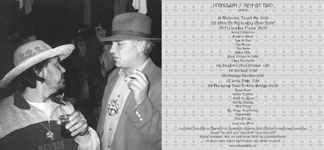
-
- inside cover
-
|
|
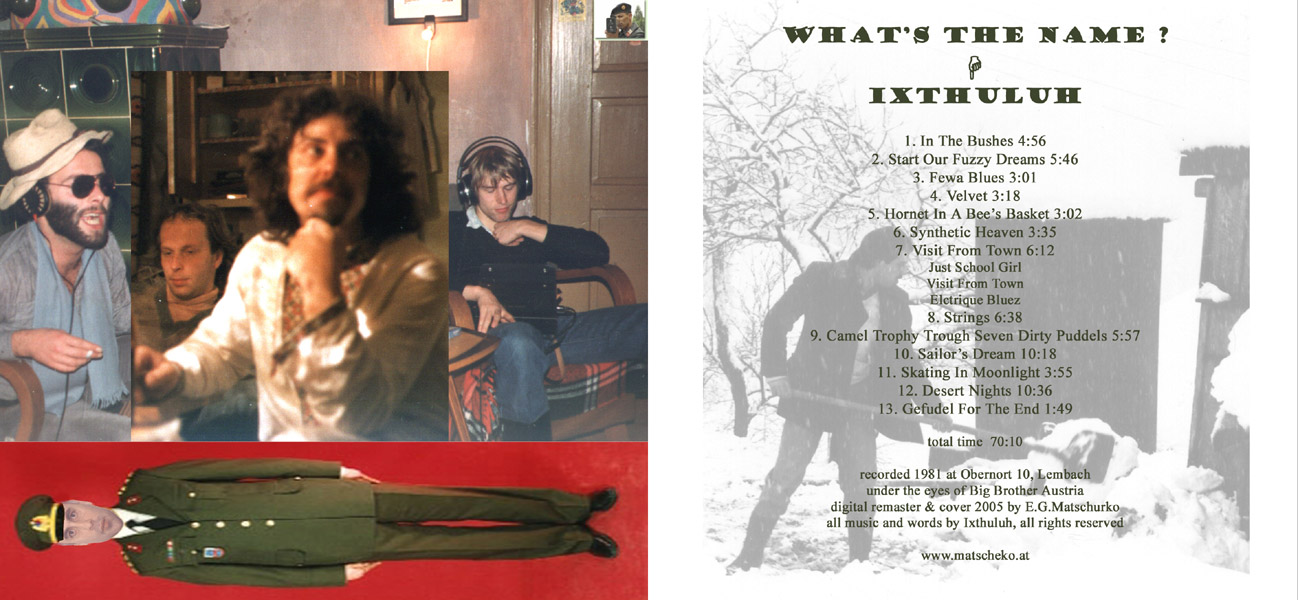
What's
The
Name, 1981 |
|
|
musicians:
Dita Lasser e- and
ac. guitar,
e-bass, keyb., lead voc
Ernst Matscheko,
drums, perc.,
bass, delay, devices
feat.
Adi Nimmerfall,
flute, keyb.
Werner Katzmair,
guitar
E.P. Kirch, bass,
guitar, voc
|
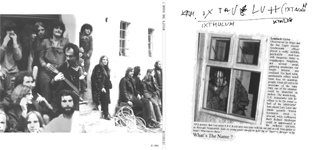
Wie
schon
im vorhergehenden Album auch hier eine durch Gäste
verstärkte Rumpfband, die sehr vielfältig und experimentell
arbeitet. Geliehene Instrumente wie Keyboards erweitern den
Sound, alles live und direkt auf Band gespielt. Nicht so
geschlossen wie Tea At Two, alles ist zufälliger, teilweise
wilder, oder auch soft und fromm wie Sailor's Dream oder
Gefudel (Gruß an Carlos !)
Like the previos album though
here play the hardcore members with guests, manifold and
experimental. Borrowed instruments like keyboards broaden
the sound, everything live and directly to the tape. Not
so closed like Tea At Two, it's more accidentally,
partially wilder or soft and devotional like Sailor's
Dream or Gefudel (Greetings to Carlos !)
|
|
 front/back-cover

-
- inside cover
-
hier noch ein Hinweis auf einen
Ixthuluh-Clip in Youtube:
Sailors Dream

|
|
Some
Chimeras (2014)
|
|
|
musicians:
Dita Lasser: guitars,
bass (6), voc
James Geiblinger:
bass (1, 2, 3)
Max Wedl: sax,
flute, perc.
Mud Shurko: bass (4,
5) drums
|
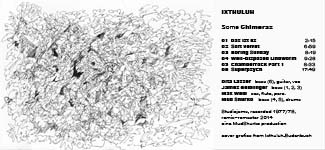
Diese
Aufnahmen
entstanden zwischen 1977 und 1978, also in der Zeit, als wir
vom gemieteten Objekt in Aschbach nach Lembach gezogen sind.
Die ersten drei Tracks stammen noch aus Aschbach, die
letzten drei haben wir schon In Lembach aufgenommen (James
Geiblinger war da schon nicht mehr dabei). Ich habe Sie 2014
neu gemischt und wiederaufbereitet, wodurch eine deutlich
ver- besserte Tonqualität erreicht wurde.
This songs we recorded between
1977 and 1978, in the time we moved from the rented house
in Aschbach to our new own one in Lembach. The first three
tracks we recorded in Aschbach, the last three in Lembach
(James Geiblinger was there already absent). I mixed and
refurbished the material new in 2014, reaching so a
obvious better sound quality.
|
|

-
|
|
Ixthuluh
overdubbed
Mud Shurko, 2008-12 |
|
|
musicians:
Dita Lasser e- and
ac. guitar,
e-bass, keyb., lead voc
Max Wedl sax
Ernst Matscheko,
drums, perc.,
bass, delay, devices
Werner Katzmair,
guitar
E.P. Kirch, bass,
guitar, voc
overdubs:
Mud Shurko
|
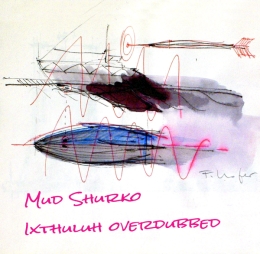
Diese Aufnahmen
entstanden durch mehr oder weniger intensive Überarbeitung
von originalen Ixthuluh-Aufnahmen. Ich habe sie auf den
diversen MudShurko Releases
veröffentlicht.
Dies hier ist die Sammlung für die Freunde von
Ixthuluh.
This songs are original
Ixthuluh recordings, which are remanufactured and
supplemented with overdubs. You can find this on several
Mud Shurko releases.
This is the collection
for the friends of Ixthuluh.
|
|